Limestone & travertine
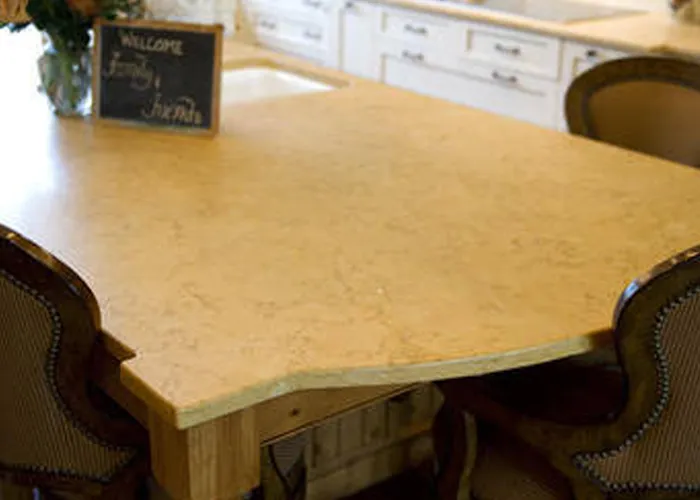
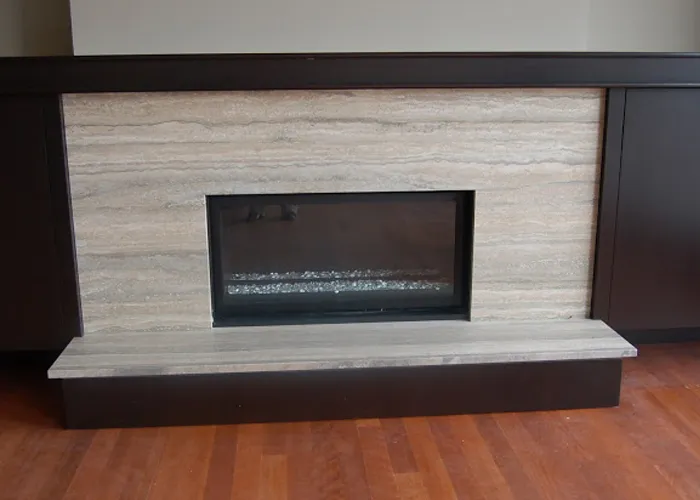
Only a limited number of limestone and travertine varieties suit countertop use, because they are vulnerable to the mild acids found in most kitchens. Many varieties of both are well suited to wall cladding or exterior applications.
Their soft earth tones give designers great flexibility in choosing colors for other interior elements.
Key features
- Limestone and travertine are relatively soft and vulnerable to abrasion.
- Calcium-based minerals react with acidic food and cleaners.
- Absorbent stone may benefit from an appropriate impregnating sealer.
- Sealing reduces absorption but does not stop acid etching.
- Travertine fill can loosen; some surfaces need voids refilled over time.
- Use trivets on counters and non-acidic cleaners for routine care.
Best uses
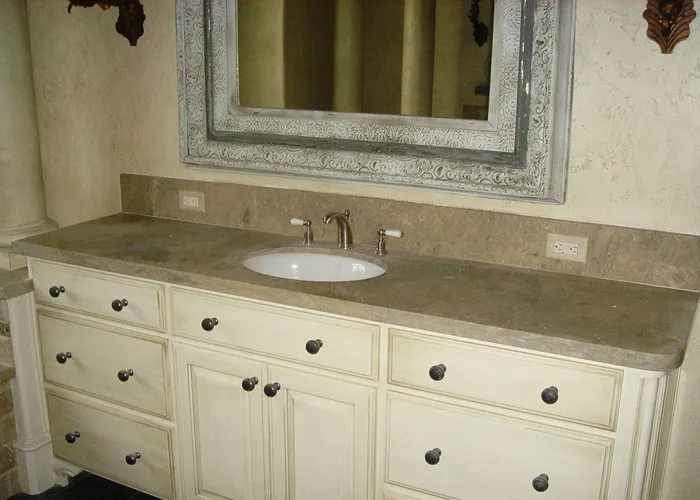
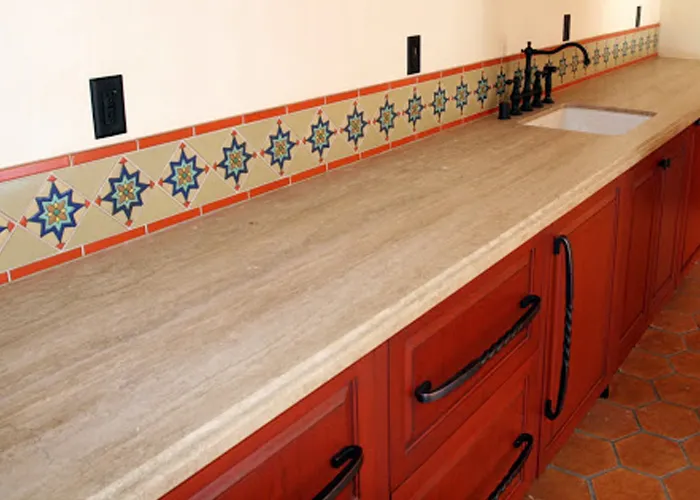
Consider limestone or travertine for lower-abuse interior features where a softer surface is acceptable. Review the finish, filling and maintenance requirements for the selected material.
A food-preparation counter or drinks bar is a challenging setting because acidic spills are difficult to avoid. Choose a less acid-sensitive stone if visible etching would be a concern.
Common questions
Why can holes reappear in filled travertine?
Fill can work loose from natural voids. Refilling may become part of normal maintenance.
Can I use a vinegar-based bathroom cleaner?
No. Vinegar and other acidic cleaners can etch limestone and travertine. Choose a cleaner approved for calcium-based natural stone.
Can sealing prevent marks from citrus juice?
No. An impregnating sealer addresses absorption, not the chemical reaction that causes etching.
Where it works
Have a project in mind?
Send us a message or call (570) 383-3988, Monday to Friday, 8 a.m. to 5 p.m.