
Soapstone
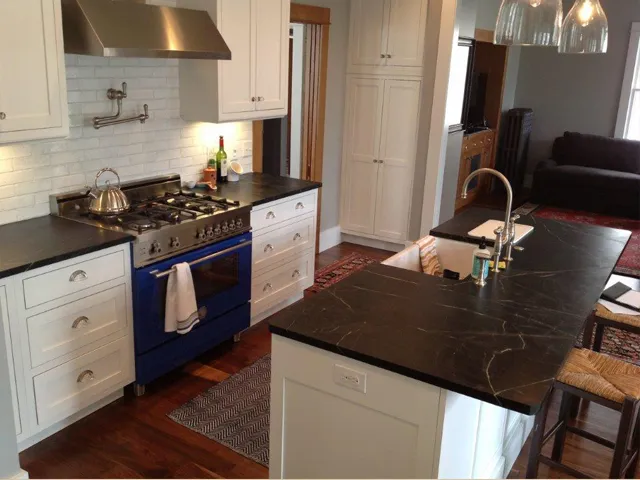
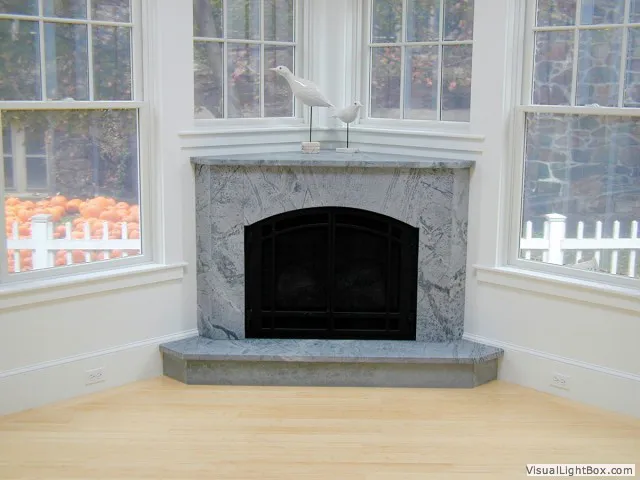
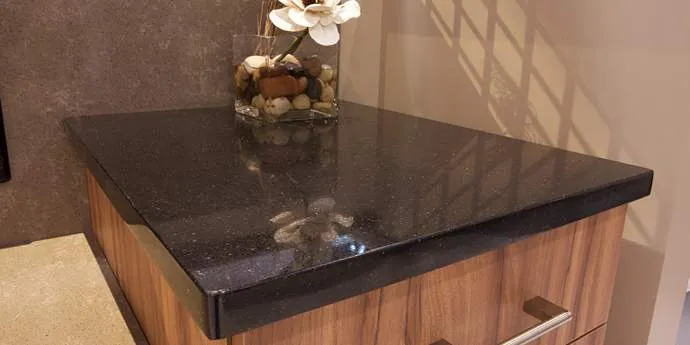
Soapstone is made up mostly of talc with varying amounts of other minerals. It is used for countertops, sinks, heaters and fireplace surrounds.
Care
Soapstone is soft to the touch, has limited hardness and can be scratched by abrasives. Some owners treat it with food-grade mineral oil to keep its luster and mask small scratches; others leave it untreated and let it develop its own patina over time.
Key features
- Soapstone’s low hardness means everyday objects can leave scratches.
- Its dense, nonporous structure generally eliminates the need for sealing.
- Kitchen acids do not etch soapstone as they do calcite-based stones.
- Soapstone tolerates heat well; trivets remain a sensible precaution.
- Oiling changes the appearance rather than providing necessary pore sealing.
- Scratch repair may involve sanding; get guidance before changing the finish.
Best uses
Choose soapstone for a working surface when resistance to acids and low absorption matter more than scratch resistance. It can suit a kitchen where visible wear is welcome rather than a defect.
It is a poor match for anyone who wants a consistently unmarked surface. Compare samples in person to judge how readily the selected variety scratches.
Common questions
Does soapstone need an impregnating sealer?
Generally, no. Its nonporous structure makes sealing unnecessary; mineral oil is an optional appearance treatment.
Will lemon juice etch soapstone?
Soapstone resists kitchen acids. That differs from marble and other calcium-based stones, which can etch.
Are all soapstone slabs equally soft?
No. Mineral content varies, and some varieties scratch more readily than others. Handle a sample before selecting a slab.
Where it works
Have a project in mind?
Send us a message or call (570) 383-3988, Monday to Friday, 8 a.m. to 5 p.m.