
Quartzite
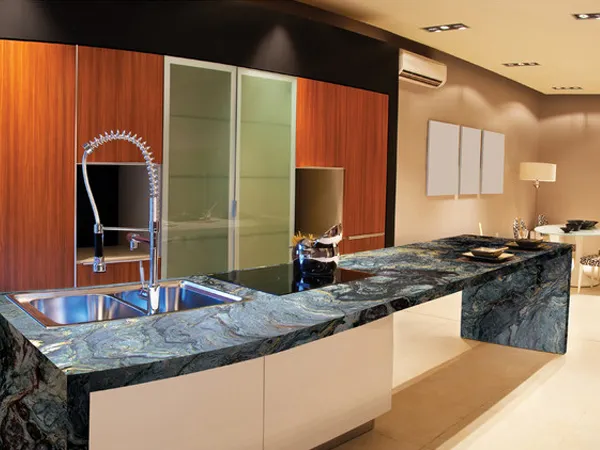
Quartzite is a strong, abrasion resistant decorative stone formed from sandstone. It works for most common uses of natural dimension stone, including countertops, tile and wall cladding.
Key features
- True quartzite is quartz-rich and highly resistant to scratching.
- Absorption varies widely, so sealing needs must be checked for the selected stone.
- True quartzite does not etch from ordinary kitchen acids.
- A quartzite label alone is not proof of the stone’s identity.
- Use trivets despite natural stone’s heat tolerance.
- Use non-acidic stone cleaners and avoid abrasive cleaning tools.
Best uses
Verified quartzite is a strong candidate for a busy kitchen when scratch resistance and resistance to food acids are priorities. Confirm absorption as well as stone identity before choosing the care plan.
It is not a guaranteed no-seal option. If you want to avoid absorption-related maintenance, do not assume every slab sold as quartzite will meet that expectation.
Common questions
Is quartzite the same product as engineered quartz?
No. Quartzite is natural stone formed from sandstone. Engineered quartz is a manufactured surface, so the names do not imply identical care requirements.
What should I check if a quartzite sample etches?
Ask the supplier to verify the stone’s identity. True quartzite resists ordinary food acids, and marble is sometimes sold under a quartzite label.
Why do some quartzites absorb more liquid than others?
Their pore structures differ. Some stones sold as quartzite are more porous than others, so the name alone does not determine sealing needs.
Where it works
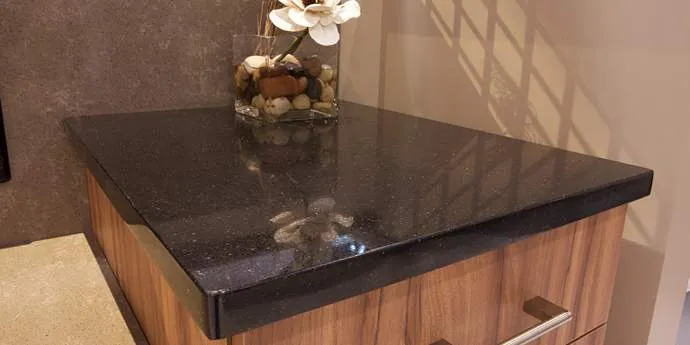
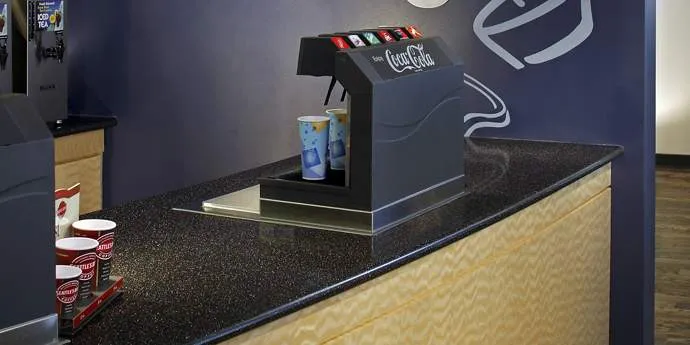
Have a project in mind?
Send us a message or call (570) 383-3988, Monday to Friday, 8 a.m. to 5 p.m.