
Onyx
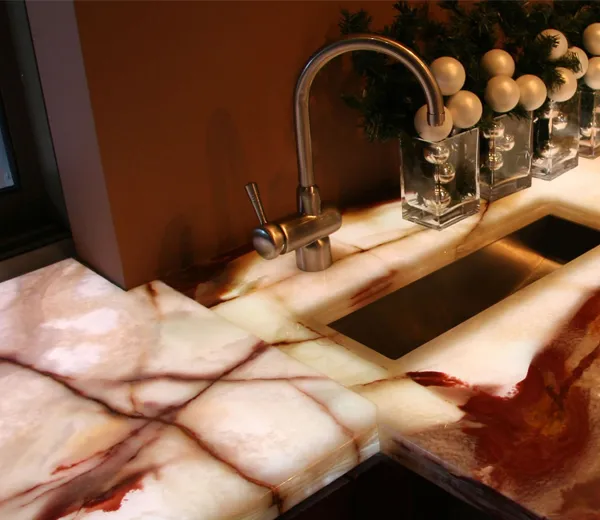
Onyx is prized for its color and veining, and best known for its translucency, which allows stunning effects when backlit. While it is vulnerable to chemical and abrasive wear, its decorative appeal is perhaps unmatched by any other material.
Key features
- Most commercial onyx slabs are banded calcite, not quartz gemstone onyx.
- Calcite is soft and scratches more readily than granite.
- Acidic drinks and cleaners can etch the surface.
- An appropriate sealer may reduce absorption but will not prevent etching.
- Use trivets and keep hot cookware off the finished surface.
- Clean gently with a non-acidic stone cleaner; avoid abrasive products.
Best uses
Consider onyx for a protected interior focal point that receives little handling. Keeping it away from food preparation and drink spills reduces exposure to acids and abrasion.
A busy kitchen worktop is a poor choice when you want easy care and an unchanged finish. For a lit feature, evaluate the actual slab with the planned lighting before finalizing the design.
Common questions
Is slab onyx the same mineral as onyx jewelry?
Usually not. Most commercial slab onyx is banded calcite, while gemstone onyx is a form of quartz. Their hardness and care needs differ.
Can I use onyx where drinks are served?
Only with care and acceptance of possible etching. Citrus juice, wine and other acidic spills can damage the finish.
Will sealing make onyx scratch-resistant?
No. An impregnating sealer does not increase the mineral’s hardness or prevent abrasive wear.
Where it works
Have a project in mind?
Send us a message or call (570) 383-3988, Monday to Friday, 8 a.m. to 5 p.m.