
Granite
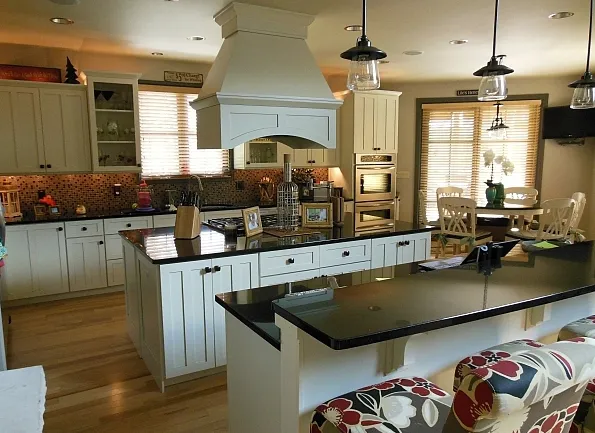
Granite is the most popular stone for countertops today. Available in a striking array of colors, granite's durability, longevity and value make it ideal for kitchen countertops and other heavily used surfaces, including table tops and floors.
Care
- Wipe up spills promptly and clean with mild soap and water
- Reseal periodically as recommended for your slab
- Use cutting boards to protect knives and the polish
Key features
- Hard mineral grains give granite strong resistance to everyday abrasion.
- Absorption varies; some granites benefit from sealing while others need little protection.
- Good heat tolerance does not replace the need for trivets.
- Most kitchen acids do not etch granite, but sensitive minerals can be present.
- Avoid acidic cleaners even on an acid-resistant slab.
- An impregnating sealer reduces absorption rather than making stone stain-proof.
Best uses
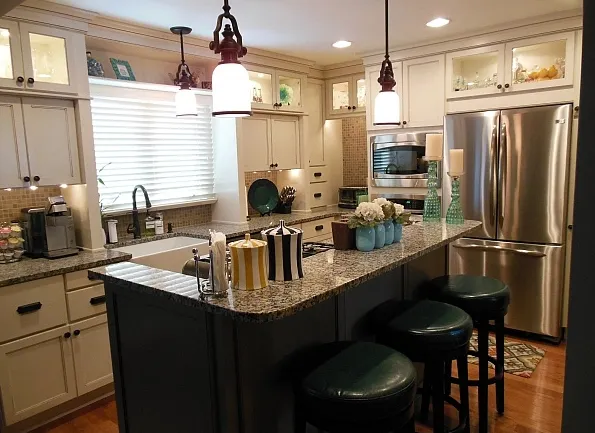
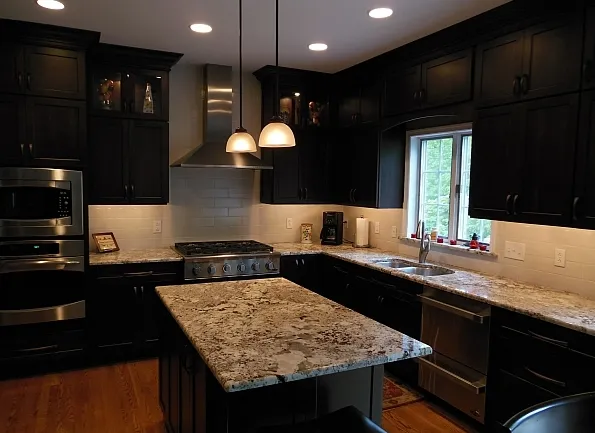
Consider granite for a working kitchen where abrasion resistance matters. Compare the actual slabs for color and mineral variation instead of assuming that every granite will look or perform alike.
It is less suitable if you expect identical patterning throughout the room or want a surface that never needs a care assessment. Confirm the selected stone’s absorption and cleaning needs before installation.

Common questions
Does all granite need annual sealing?
No. Sealing needs vary by stone and use. Follow advice for the selected slab rather than a fixed annual schedule.
Can I clean granite with vinegar?
Avoid vinegar and other acidic cleaners. Use a stone cleaner or mild detergent solution, then rinse and dry.
Will a sealer prevent every stain?
No. Sealers improve stain resistance but do not make the surface stain-proof. Blot spills rather than spreading them.
Where it works

Have a project in mind?
Send us a message or call (570) 383-3988, Monday to Friday, 8 a.m. to 5 p.m.