
Marble
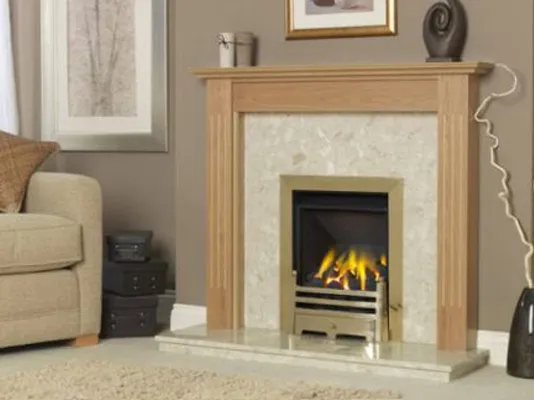
Marble is prized for its pronounced veining and often bold colors. Its beauty and elegance make it a popular choice for floors, foyers, fireplace surrounds and hearths, walls and windowsills.
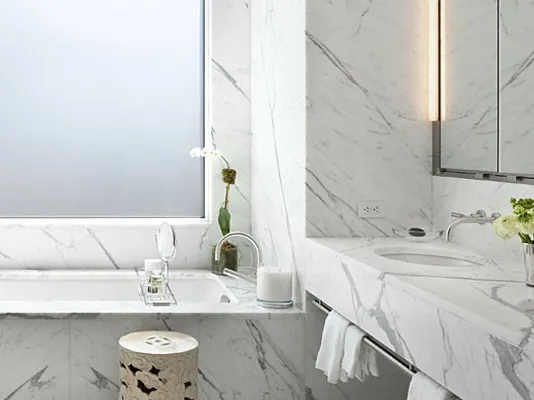
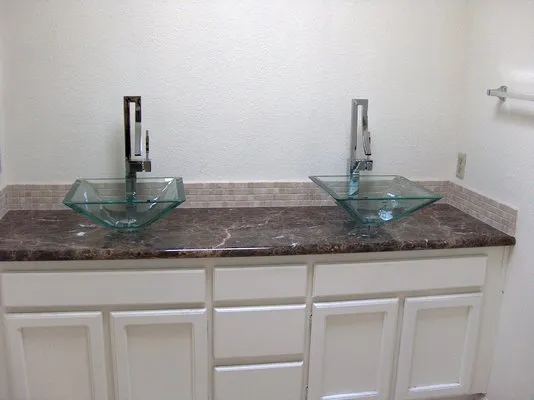
Its natural random appearance, engineering characteristics and ease of maintenance make it a premium choice for floors, wall cladding, table tops, wainscot and vanity tops. Many marbles suit wet areas, including tub decks and showers.
Care
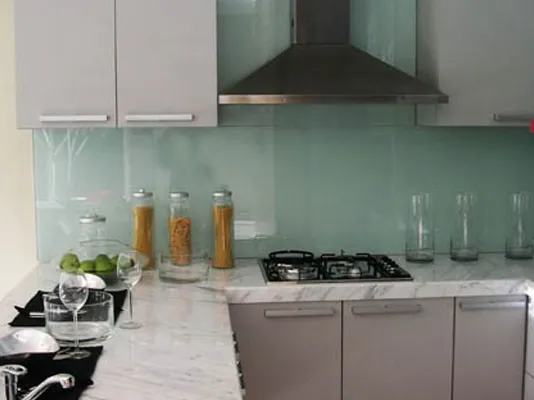
All marbles are vulnerable to abrasion and to acids, so marble is not typically recommended for kitchen countertops. Use pH-neutral cleaners and keep the surface sealed.
Key features
- Marble is softer and more vulnerable to abrasion than granite.
- Absorbent varieties can benefit from an appropriate impregnating sealer.
- Sealing does not prevent acid etching.
- Citrus juice, wine and acidic cleaners can dull the surface.
- Protect the surface from hot cookware with trivets.
- A honed finish can make etching and scratches less noticeable, not impossible.
Best uses
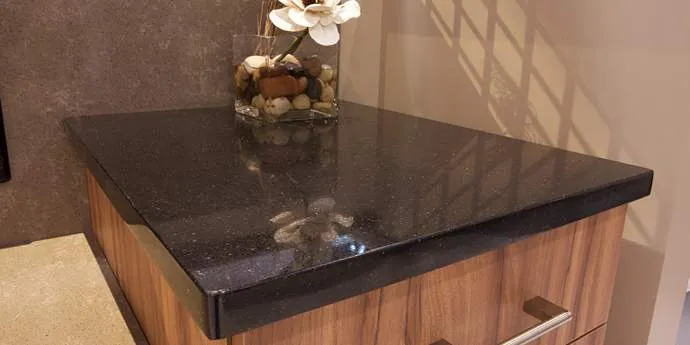
Marble suits lower-abuse decorative surfaces where owners accept changes in the finish. On a vanity, keep acidic toiletries and cleaning products off the stone.
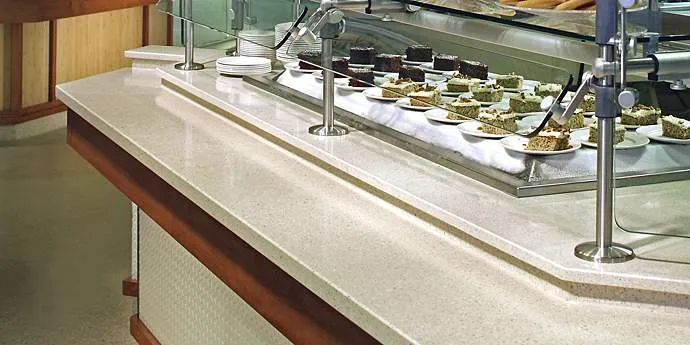
A kitchen installation calls for comfort with visible wear and prompt spill cleanup. Choose a more acid-resistant stone if an unchanged finish is a priority.
Common questions
Is a dull ring on marble always a stain?
No. Acid can etch the surface, leaving a dull mark rather than an absorbed stain. Cleaning alone will not restore an etched polish.
Will honed marble stop etching?
No. Honing changes the finish, not the stone’s acid sensitivity. Etch marks may be less noticeable than on a polished surface.
Can worn marble be refinished?
Professional restoration can often improve etching, scratches and worn finishes. The appropriate treatment depends on the stone and the damage.
Where it works
Have a project in mind?
Send us a message or call (570) 383-3988, Monday to Friday, 8 a.m. to 5 p.m.